 Norwegian
  English
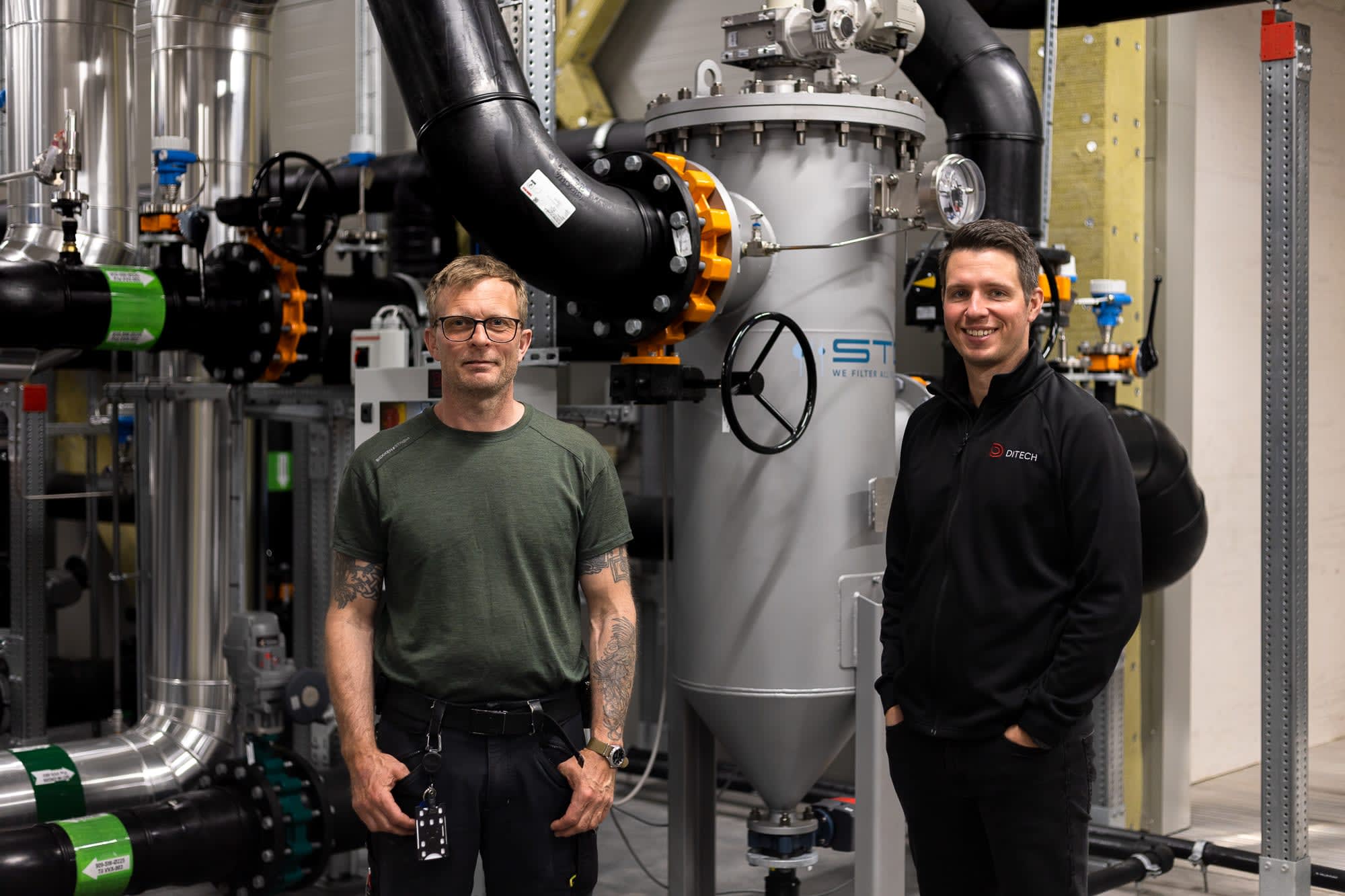
Leif Trygve Fjell, Operations Technician at Horten Industrial Park, together with Morten Andre Karlsen, Managing Director of Ditech, in front of an automatic self-cleaning filter.
Seawater as an Energy Source
At Horten Industrial Park, seawater is a key energy source for heating and cooling modern buildings. The new energy centre draws seawater from a depth of approximately 100 metres, where the thermal energy is transferred to heat pumps, heat exchangers and chillers.
The system is designed to deliver up to 5 MW of cooling and 3.5 MW of heating. For much of the year, it also provides free cooling directly through seawater heat exchangers, significantly improving energy efficiency and reducing overall energy consumption.
“We have a seawater intake extending to a depth of around 100 metres. From there, we extract thermal energy from the seawater and use it to produce heating and cooling through heat pumps and chillers,” says Leif Trygve Fjell, Operations Technician at Horten Industrial Park.
Using seawater as an energy source places high demands on filtration. Particles, shell fragments, seaweed and other organic debris can cause serious problems if they enter pumps and heat exchangers.
How the Automatic Filtration System Works
In the video below, Morten Andre Karlsen from Ditech explains how the automatic self-cleaning filter operates and how it protects the heat exchangers without interrupting the continuous operation of the energy system.
Automatic Self-Cleaning Filter Installed at a Leading Dairy Producer -->
Seawater Filtration at Horten Industrial Park
How does Horten Industrial Park ensure reliable operation of its seawater-based energy and cooling system? Learn how coarse and fine seawater filtration, combined with automatic self-cleaning filters, protect pumps and heat exchangers while ensuring stable, continuous operation.
Quick Summary
- A two-stage filtration system ensures reliable operation of the seawater system at Horten Industrial Park.
- A coarse filter protects the pumps, while an automatic self-cleaning filter protects the heat exchangers from particles.
- The solution reduces maintenance, extends equipment life and ensures efficient system performance.
Dual-Stage Filtration for Maximum System Protection
To maintain continuous operation and protect key process equipment, Horten Industrial Park uses a dual-stage seawater filtration system. Coarse and fine filtration perform separate functions while working together to minimise fouling and protect downstream components.
Coarse Filtration Safeguards the Pumps
Before entering the seawater pumps, the incoming water passes through a manually cleaned coarse strainer located at the intake. The strainer removes larger contaminants such as shell debris, seaweed and other suspended materials that could damage pump components or reduce operational reliability.
“A manual coarse filter is installed ahead of the automatic filter at the seawater intake. Its purpose is to protect the pumps before the water continues through the system,” says Morten Andre Karlsen, Managing Director of Ditech.
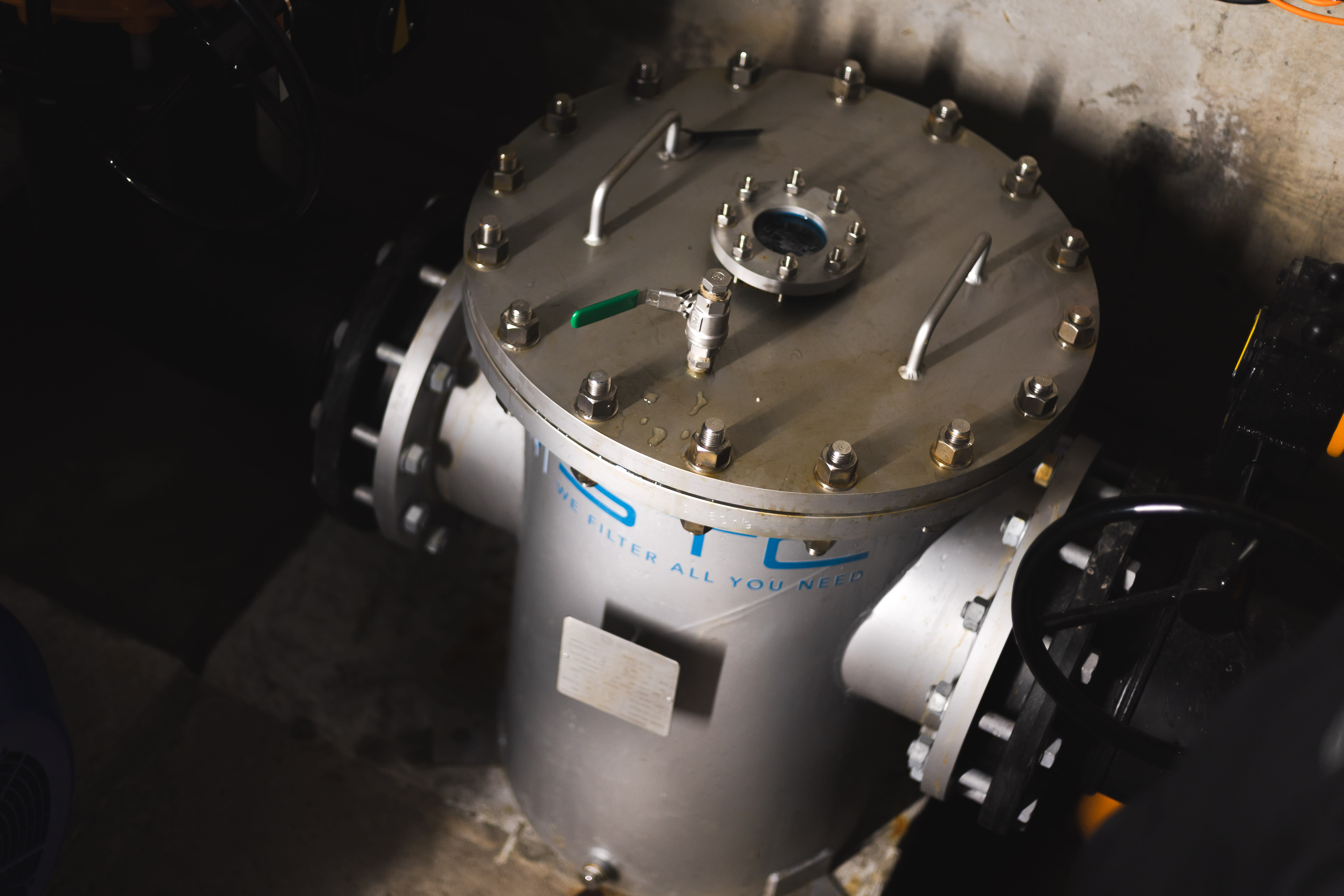
The coarse filter provides the first level of protection and features an inspection glass that enables quick visual inspection without interrupting operation.
Automatic Self-Cleaning Filter Protects the Heat Exchangers
Following coarse filtration, the seawater flows through an automatic self-cleaning filter positioned immediately upstream of the heat exchangers. This unit continuously removes fine suspended particles that could otherwise foul heat transfer surfaces, reduce thermal efficiency and increase maintenance intervals.

Dual-Stage Filtration for Maximum System Protection
To maintain continuous operation and protect key process equipment, Horten Industrial Park uses a dual-stage seawater filtration system. Coarse and fine filtration perform separate functions while working together to minimise fouling and protect downstream components.
Coarse Filtration Safeguards the Pumps
Before entering the seawater pumps, the incoming water passes through a manually cleaned coarse strainer located at the intake. The strainer removes larger contaminants such as shell debris, seaweed and other suspended materials that could damage pump components or reduce operational reliability.
“A manual coarse filter is installed ahead of the automatic filter at the seawater intake. Its purpose is to protect the pumps before the water continues through the system,” says Morten Andre Karlsen, Managing Director of Ditech.
The coarse filter provides the first level of protection and features an inspection glass that enables quick visual inspection without interrupting operation.
Automatic Self-Cleaning Filter Protects the Heat Exchangers
Following coarse filtration, the seawater flows through an automatic self-cleaning filter positioned immediately upstream of the heat exchangers. This unit continuously removes fine suspended particles that could otherwise foul heat transfer surfaces, reduce thermal efficiency and increase maintenance intervals.
Dual-Stage Filtration for Maximum System Protection
To maintain continuous operation and protect key process equipment, Horten Industrial Park uses a dual-stage seawater filtration system. Coarse and fine filtration perform separate functions while working together to minimise fouling and protect downstream components.
Coarse Filtration Safeguards the Pumps
Before entering the seawater pumps, the incoming water passes through a manually cleaned coarse strainer located at the intake. The strainer removes larger contaminants such as shell debris, seaweed and other suspended materials that could damage pump components or reduce operational reliability.
“A manual coarse filter is installed ahead of the automatic filter at the seawater intake. Its purpose is to protect the pumps before the water continues through the system,” says Morten Andre Karlsen, Managing Director of Ditech.
The coarse filter provides the first level of protection and features an inspection glass that enables quick visual inspection without interrupting operation.
Automatic Self-Cleaning Filter Protects the Heat Exchangers
Following coarse filtration, the seawater flows through an automatic self-cleaning filter positioned immediately upstream of the heat exchangers. This unit continuously removes fine suspended particles that could otherwise foul heat transfer surfaces, reduce thermal efficiency and increase maintenance intervals.

Automatic Self-Cleaning Filter from Ditech
Ditech Coarse Filter with Inspection Window
A coarse filter removes large contaminants such as shell debris, seaweed and floating solids before they enter the pumps, protecting critical components against wear, clogging and mechanical damage.
Suspended solids can accumulate inside heat exchangers, reducing heat transfer efficiency, increasing pressure losses and resulting in higher operating costs and maintenance requirements.
Duplex stainless steel combines high mechanical strength with outstanding resistance to corrosion in seawater, making it well suited for harsh marine and industrial operating conditions.
These filtration systems are ideal for energy centres, cooling systems, heat pump installations, industrial process water, aquaculture, marine applications and seawater cooling systems.
Key Things to Know
Looking for Reliable Seawater Filtration?
Ditech provides manual coarse filters, automatic self-cleaning filters and engineered filtration systems for seawater applications. Our solutions help protect pumps, heat exchangers and critical process equipment while supporting reliable, continuous operation.
Get in touch with our filtration specialists to find the most suitable solution for your system.