 Norwegian
 English

Publisert: 01.08.26 Bilder og video i artikkelen er hentet fra Ditech
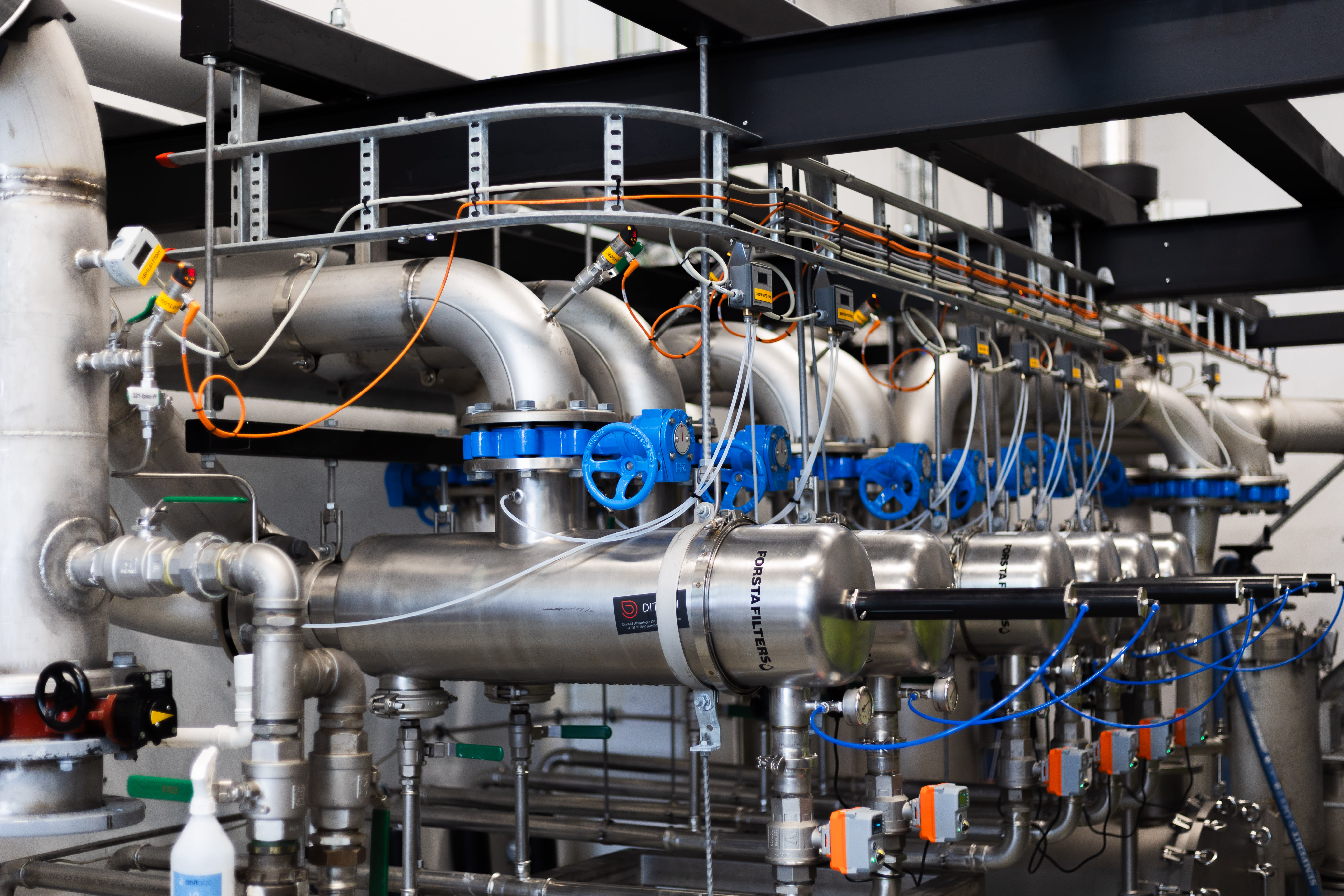
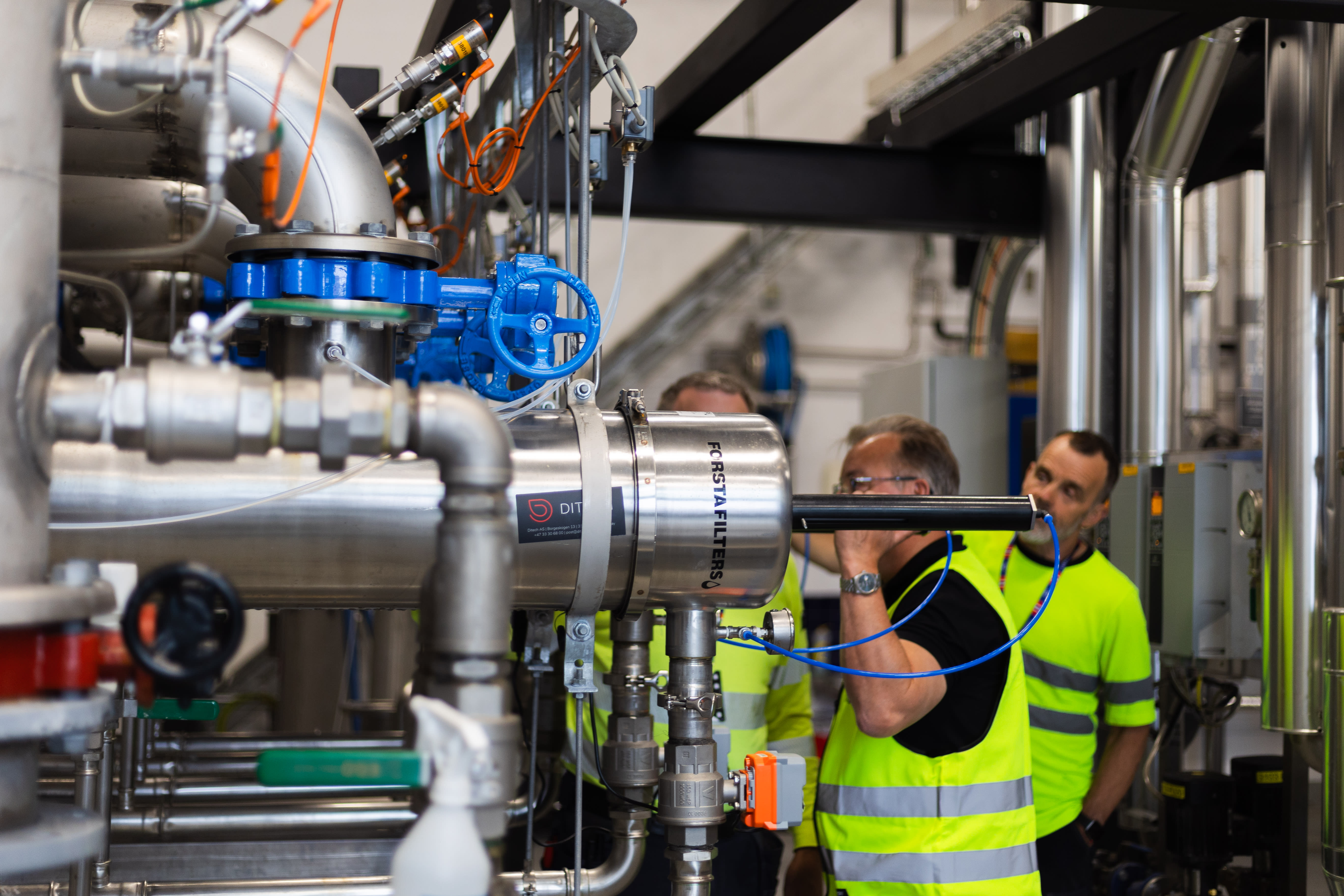
Ditech has supplied a complete four-stage filtration solution, where water is progressively filtered from 50 microns down to 1 micron before UV treatment. The solution combines automatic particle removal, fine filtration and UV disinfection, while providing operators with effective control over the system.
Why Use Multiple Filtration Stages?
Water can contain particles of various sizes. If the entire particle load is directed straight to a fine filter element, the elements will become clogged more quickly and require more frequent replacement.
With multi-stage filtration, each filter serves a specific purpose:
Stage 1 – 50 microns: An automatic self-cleaning filter removes larger particles.
Stage 2 – 10 microns: Automatic self-cleaning filtration removes smaller particles before fine filtration.
Stage 3 – 1 micron: High Flow filter elements reduce the remaining particle load before UV treatment.
Stage 4 – UV: UV-C light is used for microbiological treatment of the water.
This configuration allows the automatic filters to handle the majority of the particle load, while the High Flow elements perform the fine filtration they are designed for.
Four-Stage Filtration Provides Better Control
When water quality requirements are high, a single filter is not necessarily enough. By implementing a multi-stage filtration process, larger particles can be removed early, reducing the load on fine filters and creating better conditions for effective UV treatment.
Short Summary
- Four-stage filtration gradually removes particles from 50 microns down to 1 micron before UV treatment.
- Automatic self-cleaning filters reduce the load on High Flow filter elements and minimize the need for manual intervention.
- Fine filtration before UV treatment reduces the particle load and creates better conditions for effective UV disinfection.
High Flow Filtration Down to 1 Micron
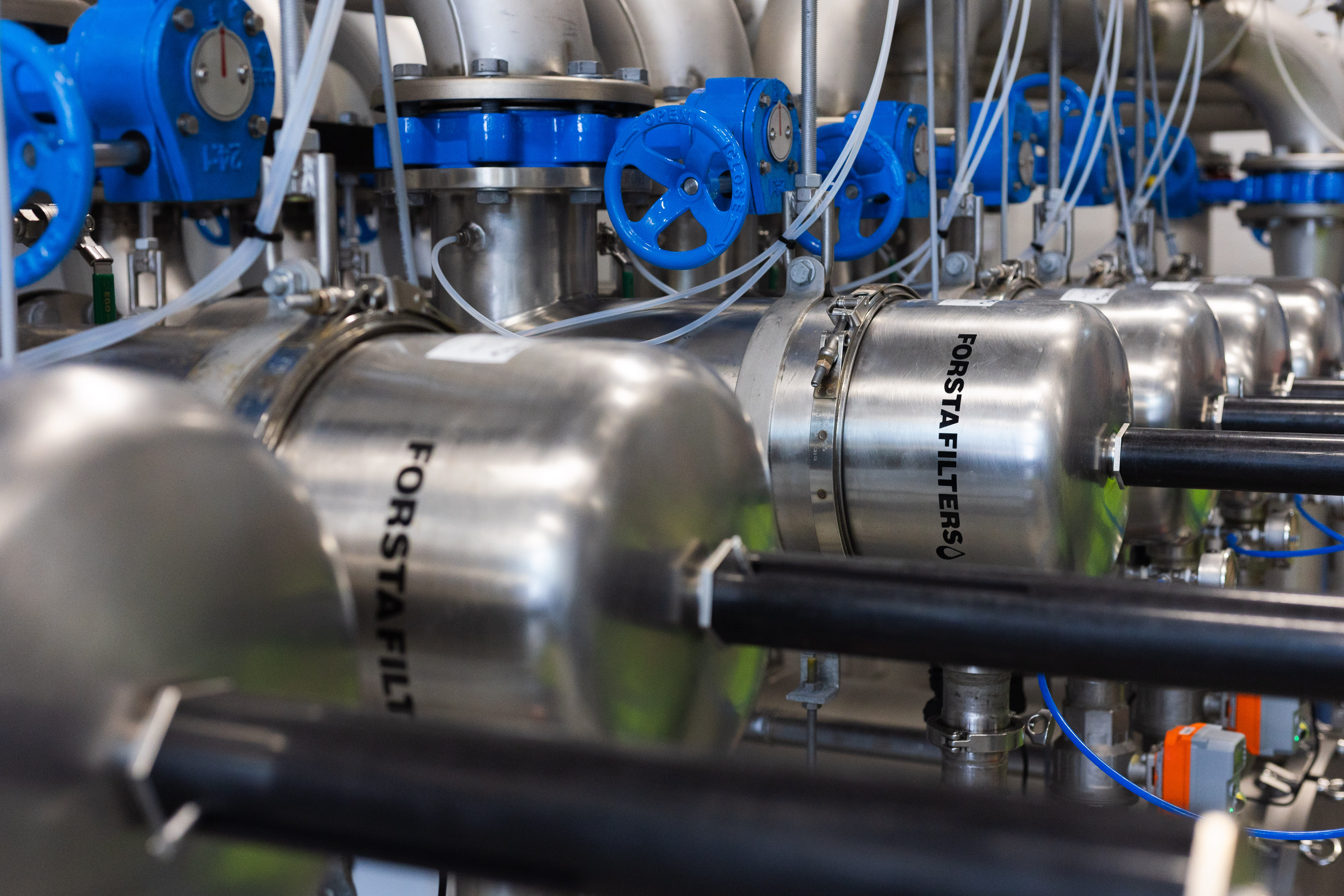
After the two self-cleaning filtration stages, the water passes through High Flow filter elements with a filtration rating of 1 micron.
High Flow filtration is designed for applications involving large volumes of liquid and high filtration capacity requirements. The elements combine a large filtration area and high dirt-holding capacity with the ability to handle high flow rates.
In this solution, the High Flow elements play an important role: reducing the remaining particle load before UV treatment. Since the water has already been filtered at 50 and 10 microns, the load on the 1-micron elements is reduced. This allows for more efficient use of the filter elements and more predictable intervals between filter replacements.
Learn more about High Flow filter housings -->
Why Filter Before UV Treatment?
The final stage of the solution is UV disinfection. UV-C light is used to inactivate bacteria, viruses and other microorganisms, preventing them from reproducing. The treatment requires no chemical dosing and leaves no chemical residues in the water.
For UV treatment to work effectively, the quality of the water entering the UV system is important. Particles can create what is known as UV shadowing, where microorganisms are shielded from UV light by other particles in the water.
By progressively filtering the water down to 1 micron, the particle load is reduced before UV treatment. This creates better conditions for UV light to reach microorganisms and perform effective disinfection.
The combination of mechanical filtration and UV treatment is therefore essential: the filters remove particles, while the UV system provides microbiological treatment.
Learn more about chemical-free UV water treatment for food and beverage applications -->
Better Control of Daily Operations
The first two filtration stages are cleaned automatically, while operating data and differential pressure measurements provide a clear overview of the system's filter load.
In the High Flow filtration stage, increasing differential pressure indicates when the filter elements are becoming clogged, allowing filter replacements and maintenance to be planned based on their actual condition.
This enables easier monitoring, reduces the need for manual intervention and provides more predictable operation.
Read how Fresh Water Norway optimized its filtration solution -->
Automatic Self-Cleaning Filtration at 50 and 10 Microns
The first two filtration stages are automatic and self-cleaning. Water is initially filtered at 50 microns to remove larger particles. It then passes through a 10-micron filtration stage, where smaller particles are captured.
Particles accumulate on the filter screens and are automatically removed during the cleaning cycle. The system monitors the differential pressure between the inlet and outlet, and when the pressure differential increases, the cleaning cycle starts automatically.
This provides several benefits:
- A large proportion of the particle load is removed automatically
- Reduced need for manual cleaning
- Lower particle load on downstream filter elements
- More efficient use of filtration capacity
- Potentially longer intervals between filter replacements
The more particles removed during the automatic filtration stages, the better the operating conditions for the subsequent fine filtration stage.
Learn more about self-cleaning filters for process water -->
Do you need help assessing water quality, flow capacity or filtration requirements in your system?
Ditech provides technical guidance and sizing of complete filtration solutions tailored to your process and operating conditions.