 Norwegian
  English
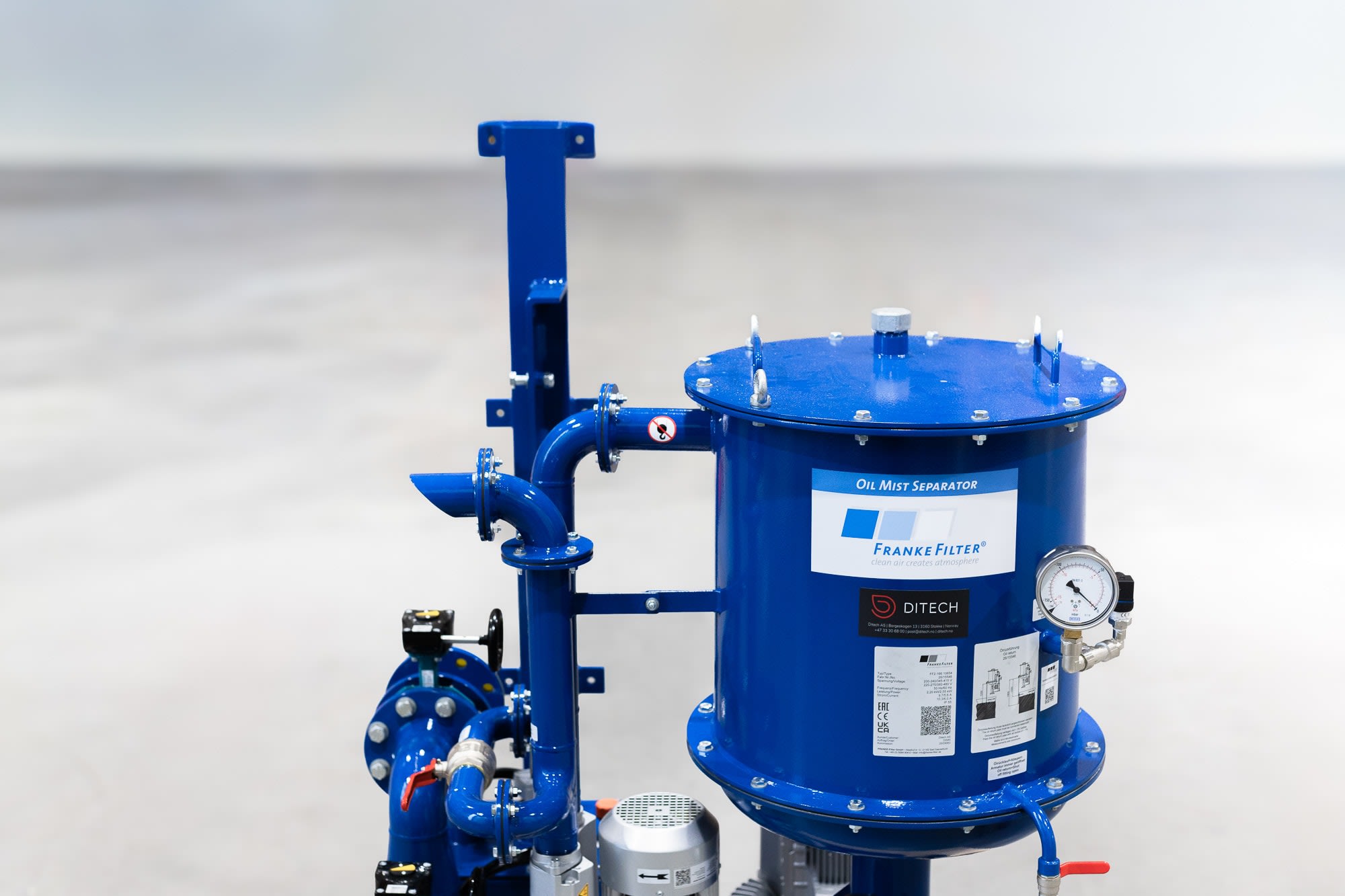
Bildet hentet fra Ditech
What is oil vapour and why is it a problem?
Oil vapour and oil mist occur when oil is exposed to temperature, pressure and mechanical movement. This is common in rotating equipment and closed systems where oil circulates continuously.
When the oil evaporates or is dispersed into small particles in the air, several challenges arise:
Degraded working environment and potential exposure to health hazardsOil film on surfaces and equipmentLoss of oil from the systemIncreased need for maintenance and cleaningRisk of reduced lifetime of components
In many cases, this is not only a working environment issue, but a direct impact on operational reliability and costs.
Oil mist separator: complete guide for industry, hydropower plants and power stations
An oil mist separator is used to remove oil vapour and oil mist from air in technical systems. The solution is also referred to as oil mist extraction or oil fog extraction, and is particularly important in applications such as turbines, gearboxes and hydraulic systems. Without control of oil mist, this can affect health, safety and environment, lead to pollution, reduce operational reliability and shorten the lifetime of critical equipment.
Short version
- Oil vapour and oil mist occur in technical systems such as turbines, gearboxes and hydraulics, and can affect both the working environment, equipment and operation
- An oil mist separator extracts the oil vapour, separates oil from air and makes it possible to return the oil to the system
- The right solution can provide improved operational reliability, reduced maintenance and lower total costs
How does an oil mist separator work?
1. Oil vapour is extracted from the source using controlled vacuum
2. Air containing oil is transported via piping to a closed filter housing
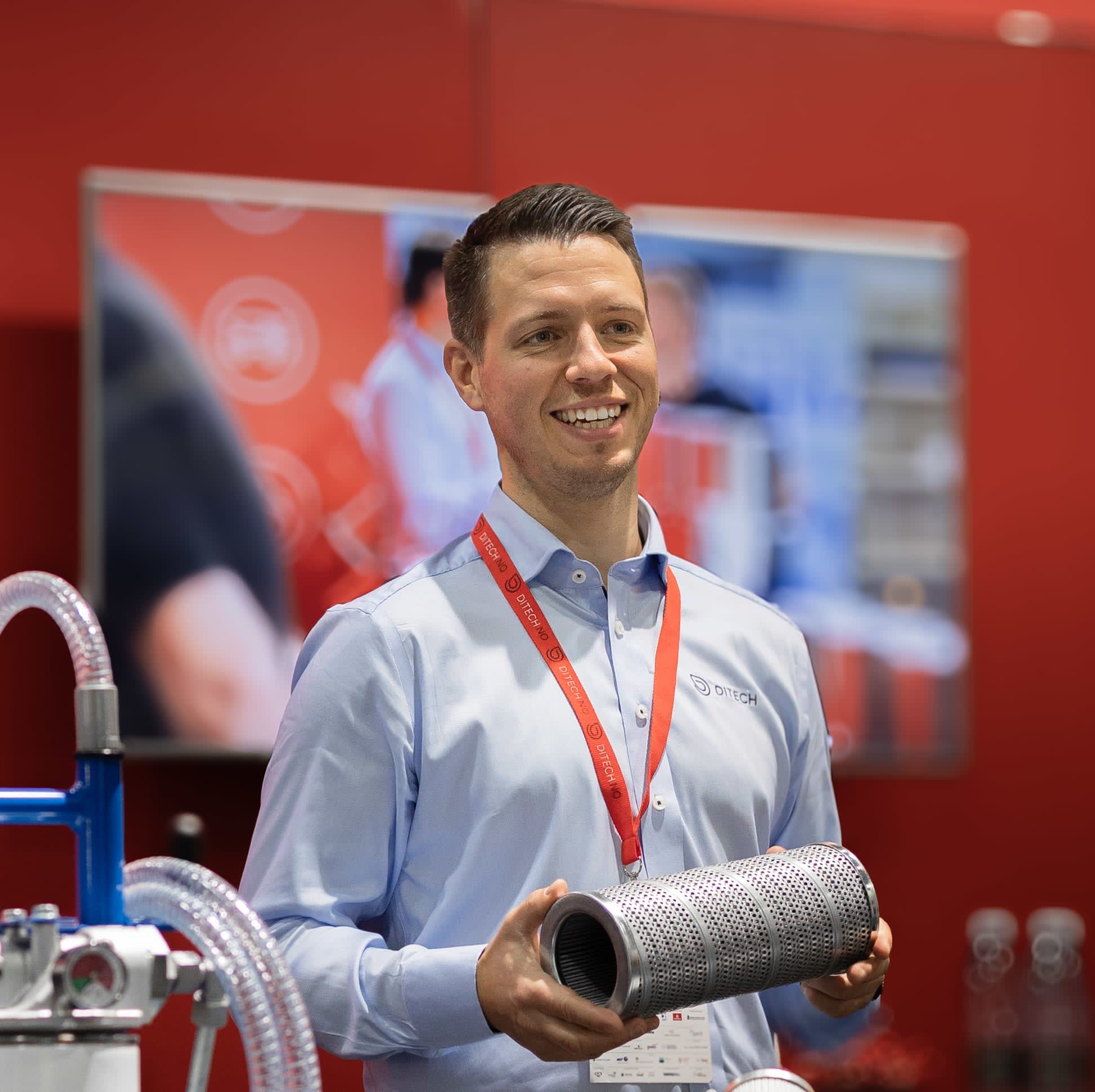
3. Inside the separator, high-efficiency filter elements separate oil from air
4. The oil particles coalesce and are collected as liquid
5. The separated oil can in many cases be returned to the system
6. Cleaned air is safely released back into the surroundings
In advanced solutions, filtration levels down to 0.1 micron can be achieved, with an efficiency of up to 99.9%, resulting in a very high degree of cleanliness of the outlet air.
Oil vapour often occurs in turbines and generators where oil is used for lubrication and cooling. Without control, this can lead to oil loss, contamination and challenges related to operation and maintenance.
Compressors, gearboxes and hydraulic systems often generate oil vapour. This can affect both machines and the surrounding environment, and requires controlled extraction and filtration.
In production environments, oil mist can affect both the working environment and visibility. Source extraction with a separator contributes to cleaner and safer working conditions.
Applications and typical challenges
Why install an oil mist separator?
Based on experience from installations:
- Improved health, safety and working environment
- Reduced oil contamination in the surroundings
- Less fouling of machines and rooms
- Extended lifetime of components and bearings
- Increased operational reliability in critical systems
This applies to power plants, compressor installations and marine applications.
Reuse of oil
An important advantage of oil mist separators is the possibility to reuse the separated oil. In many cases, this oil can be cleaner than the oil already circulating in the system, and can therefore be returned and reused. When the same oil type is used in the system, the separated oil will often have:
Central unit per system
One oil mist separator is installed per system or machine line for centralized and efficient handling of oil vapour
Improved system control
Provides a complete overview and control of oil vapour throughout the entire oil system
Connected to multiple bearings
Can be connected to multiple bearing points in the same system, such as upper guide bearing, lower support bearing and turbine bearing
Simpler installation and maintenance
Reduced need for piping and easier follow-up during operation
Technical principle and system design
How to choose the right oil mist separator?
| Evaluation criteria | What must be considered |
| Airflow and volume |
How much air and oil vapour the system generates, and what capacity the separator must handle |
| System temperature | Temperature affects both the formation of oil vapour and the choice of filter solution |
| Type of oil | Different oil types have different properties that can affect separation and recirculation |
| Operating time and load | Continuous operation and varying load place different demands on performance and stability |
| Installation point | Placement in the system affects function, piping and maintenance |
| Requirements for efficiency and emissions | Requirements for clean air, filtration level and emission levels must be considered when selecting a solution |
An oil mist separator is a solution that removes oil vapour and oil mist from air in technical systems.
Oil mist extraction is targeted removal of oil vapour at the source, while ventilation is general air exchange.
Typical applications include turbines, gearboxes, compressors and hydraulic systems.
Yes, in many cases the separated oil can be returned to the system.
It depends on operation and load, but regular inspection and filter replacement are normally required.
FAQ
Need help?
Not sure which solution fits your system?
Contact us – we will help you find the right oil mist separator based on your application.